CFD studies, run by our engineers.

- Wind and heat
- 12+
- studies since 2023, most at data center campuses
- Dispersion
- 14
- studies since 2023, 12 for hospitals
- Cooling failure
- 18
- data center studies since 2023
- All three
- 40+
- engineering studies since 2023
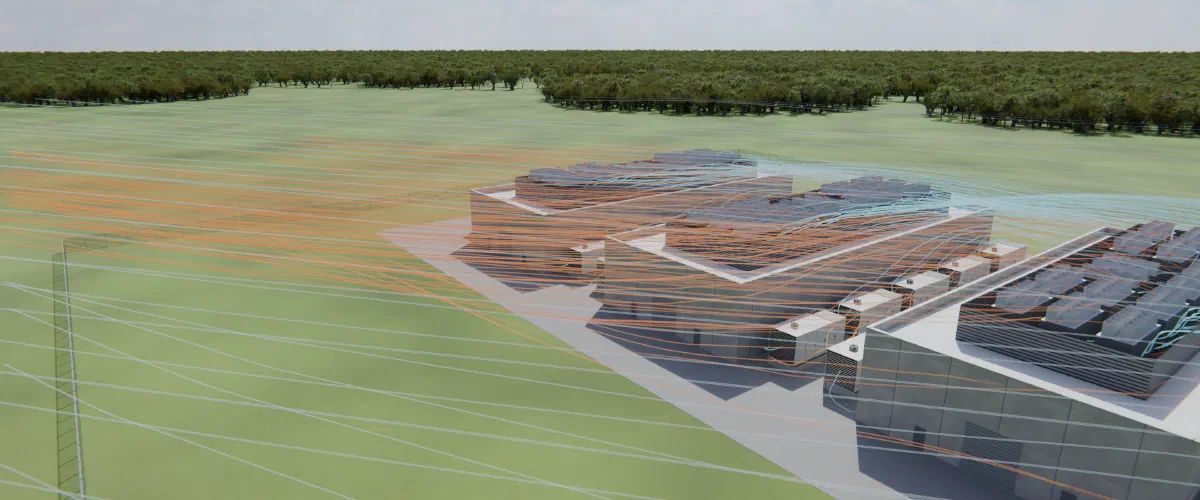
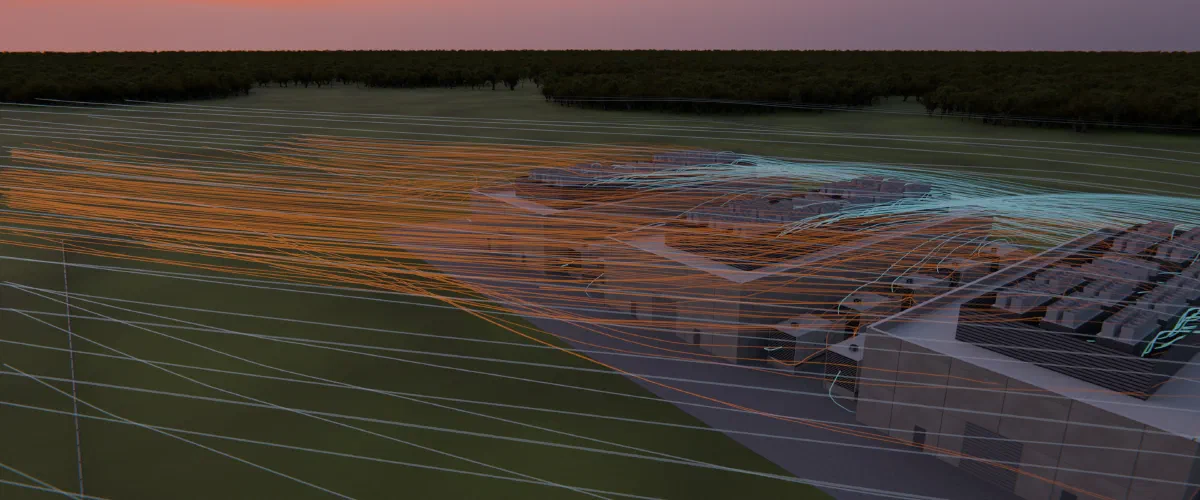
Campus airflow studies
Wind across the whole campus: the temperature of the air at every chiller, condensing unit and generator intake, and where the equipment should go.
- →How much hotter than the day is the air each unit takes in?
- →Which wind directions are the problem, and what happens on a still day?
- →Does a screen wall or a discharge stack help, or make it worse?
condensing units on our demo campus took in air more than 3.6 °F above the outdoor air, on a 110 °F day in a 35 mph wind
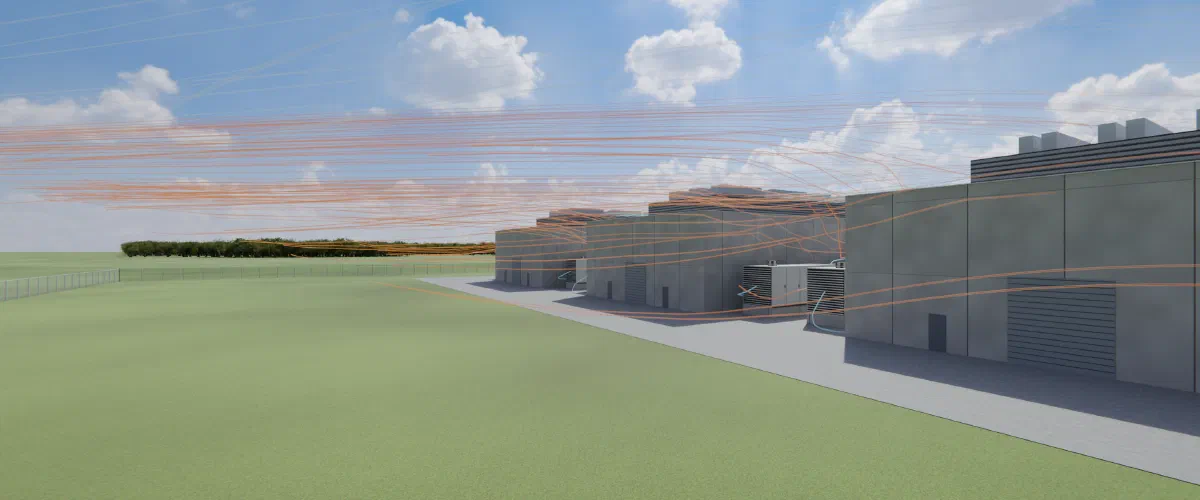
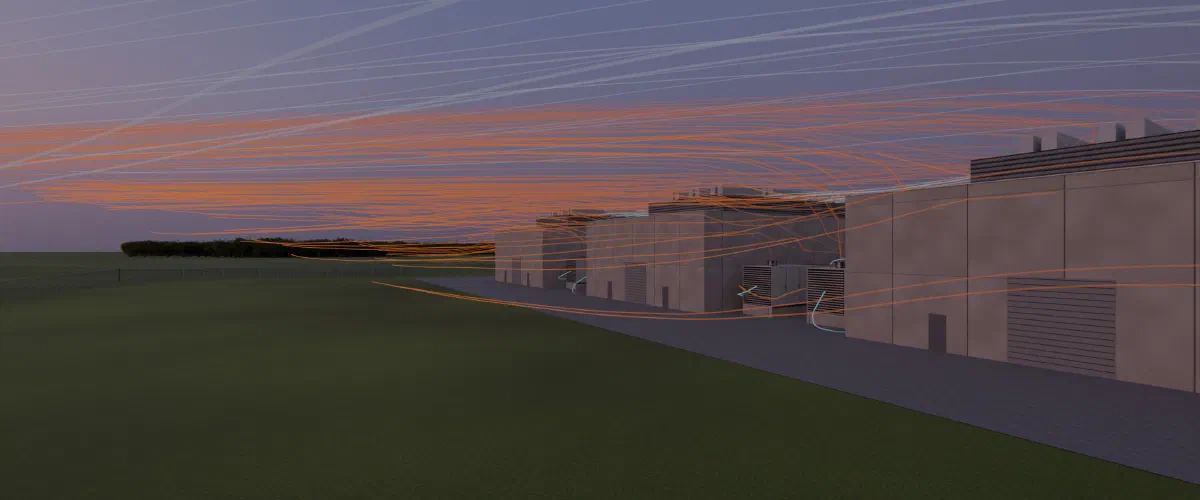
Exhaust and NOx dispersion studies
Generator, boiler and truck exhaust at your air intakes: NO₂ and CO at every intake and louver, against EPA limits.
- →Does exhaust from a generator, boiler stack or loading dock reach an air intake?
- →Which wind directions are the problem?
- →How tall does a stack need to be, and where should a new intake go?
EPA's 1-hour limit for NO₂. Every study reports NO₂ and CO at each intake against it, one row per intake and wind case
Cooling-failure studies
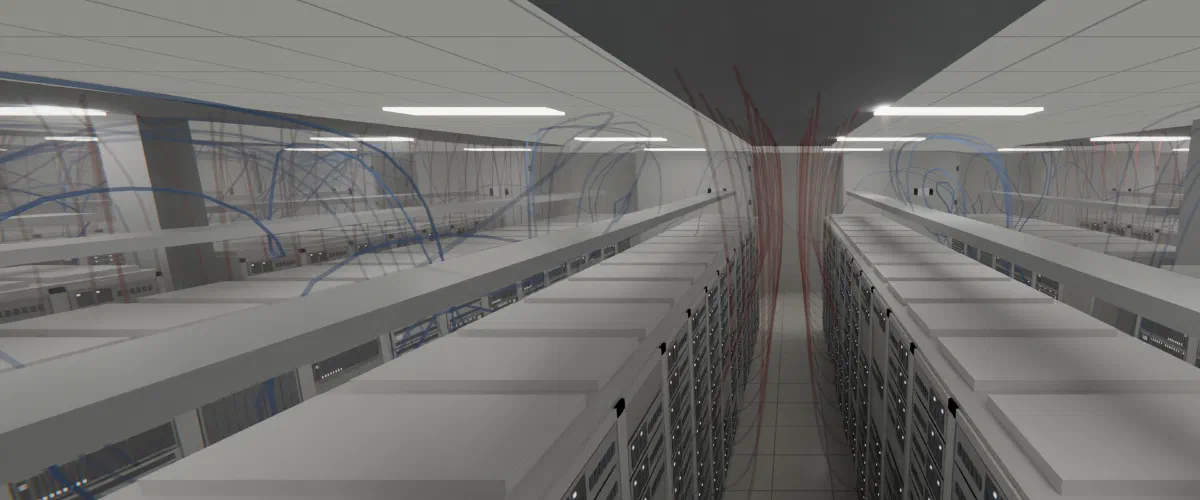
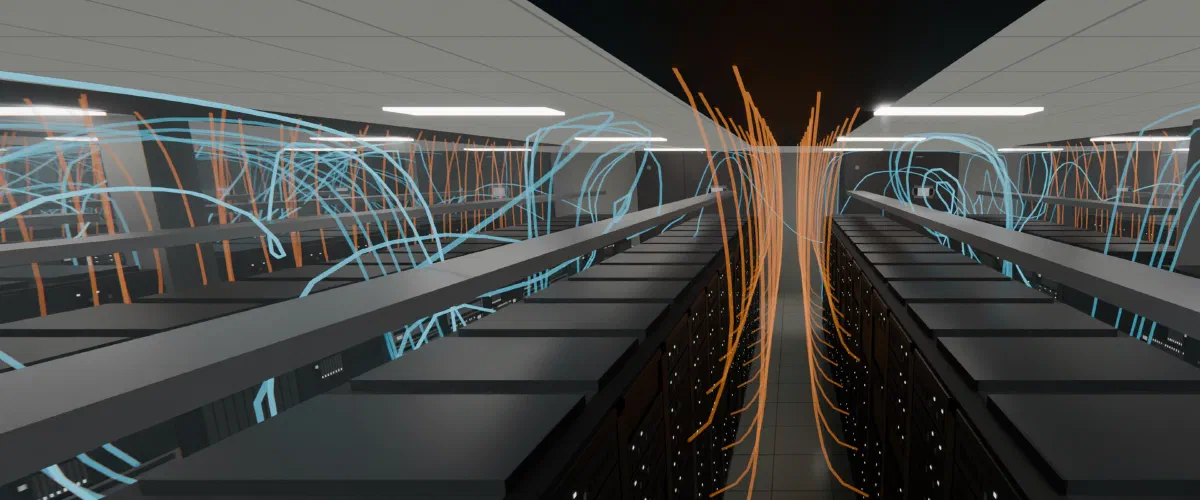
Your data hall through a power or cooling failure, second by second: when each rack passes the ASHRAE limits, and how fast the room recovers.
- →How long until the first rack passes 27 °C, and 32 °C?
- →Is the UPS ride-through long enough, and do the fans need to be on it?
- →When the cooling comes back, how fast does the room recover?
until the first rack passed 27 °C, after every cooling unit in a 234-rack, 936 kW hall stopped
Four steps, the same for every study.
- 01
You send the drawings
The site plan or your CoolSim model, the equipment list and the question you need answered.
- 02
We agree the cases
The wind directions, failure sequences or sources, and the intakes or racks that matter, before anything is run.
- 03
We build and run it
Our engineers build the model, run each case and send you a report: every number, every assumption written down.
- 04
We walk you through it
A call on the results, and the model run again when the layout changes.
Same solvers, different hands on the model.
You build it
- ✓You model the hall or the site in CoolSim on your PC
- ✓We mesh and solve it with Ansys on our cluster
- ✓A report comes back with every job
- ✓Best for: steady-state rooms you change often
We build it
- ✓Our engineers build the model from your drawings
- ✓Transient, dispersion and multi-building campus cases
- ✓A written report, and a walk-through of the results
- ✓Best for: a decision with a deadline, or a question nobody has a template for
What's the question?
Send us the drawings and what you need to decide. We’ll agree the cases with you and send a quote.
Scope a study